
2026 NEW IPF RULES: What They Mean for Lifters
International Powerlifting Federation has new rules again. Sort of. Not that it affects most lifters, but still these are the trends some of which can propagate into USAPL, USPA or other federations depending where you live and compete. Of course if you're in Powerifting America- these rules affect you directly starting March 1st 2026.
The revisions affect equipment, technique, presentation, and meet-day procedures. I’ll walk through the most important items, explain how they change things on the platform, and give practical steps you can use in training and before competition.
Overview: tone of the rulebook
The new rules tighten many technical calls while relaxing a few practical restrictions. The main goal is consistency and safety, especially as the sport becomes more widely broadcast. That means more precise judging language, new equipment clarifications, and a cooler platform vibe - less theatrics, more predictable flow.
Key rule changes at a glance
- Nominations must be submitted 30 days before championships. Not something that matters for the majority of competitors, but handy for meet organizers.
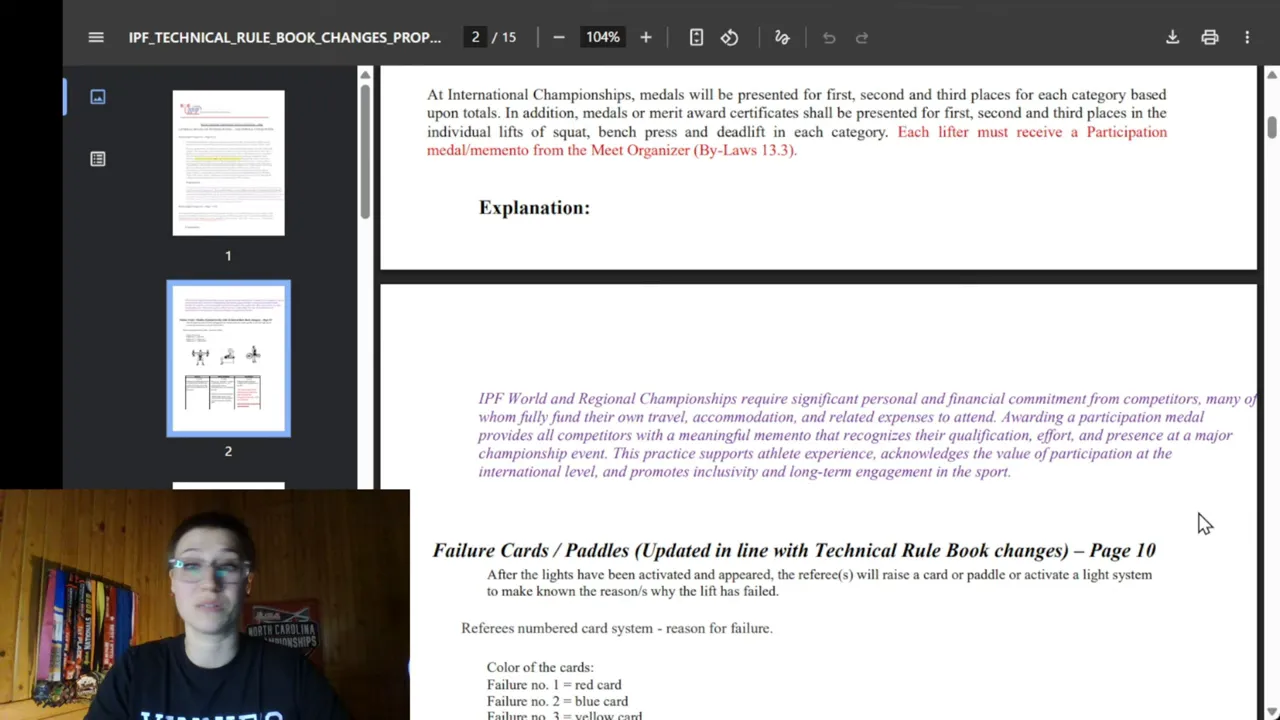
- Every lifter will receive a participation medal at big meets. I like this change - everyone at this level deserves a sweet lil souvenir.
- Bench requirements tightened: elbows must be locked before the start and no upper-body thrust to initiate the press. The upper body thrust is A HUGE DEAL for those using the ribcage to propell the bar up after the pause. Issue for larger weight categories. It's interesting how in the note they say that one may push the bar into the chest all they want, but THE BODY MUST NOT SHIFT AT ALL when the bar starts the upward movement. Not something possible to implement in real life imho.
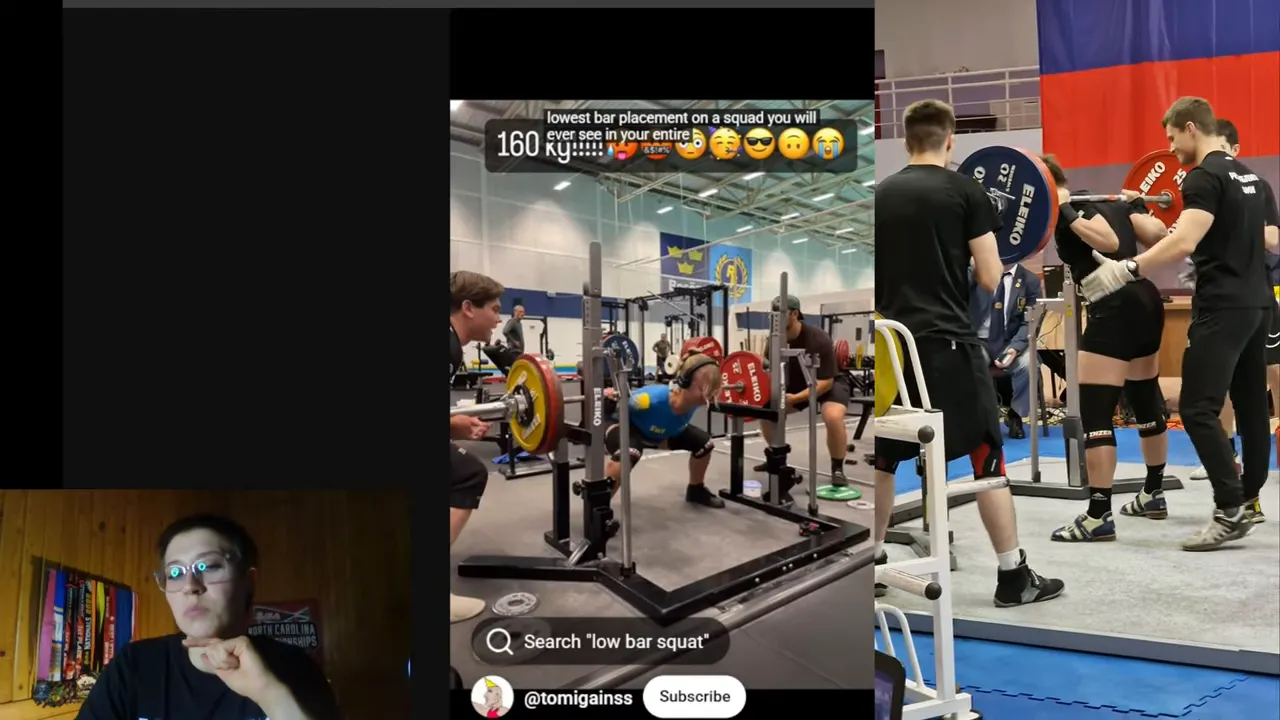
- Squat bar position must sit no lower than the posterior deltoid level. Huge deal for folks like me! In the image below you can actually see my last meet where the judges asked me to PUT THE BAR HIGHER because it was not sitting on my shoulders... pointing to the IPF rule book where some pixelated bro has the bar sitting across his neck pretty much. I squatted 15 kg less than planned in that meet. Coach applauded since we didn't train high bar squat, but I was clearly pissed. Now everyone can just expect this to be polieced more strictly, so french extra low bar anymore.
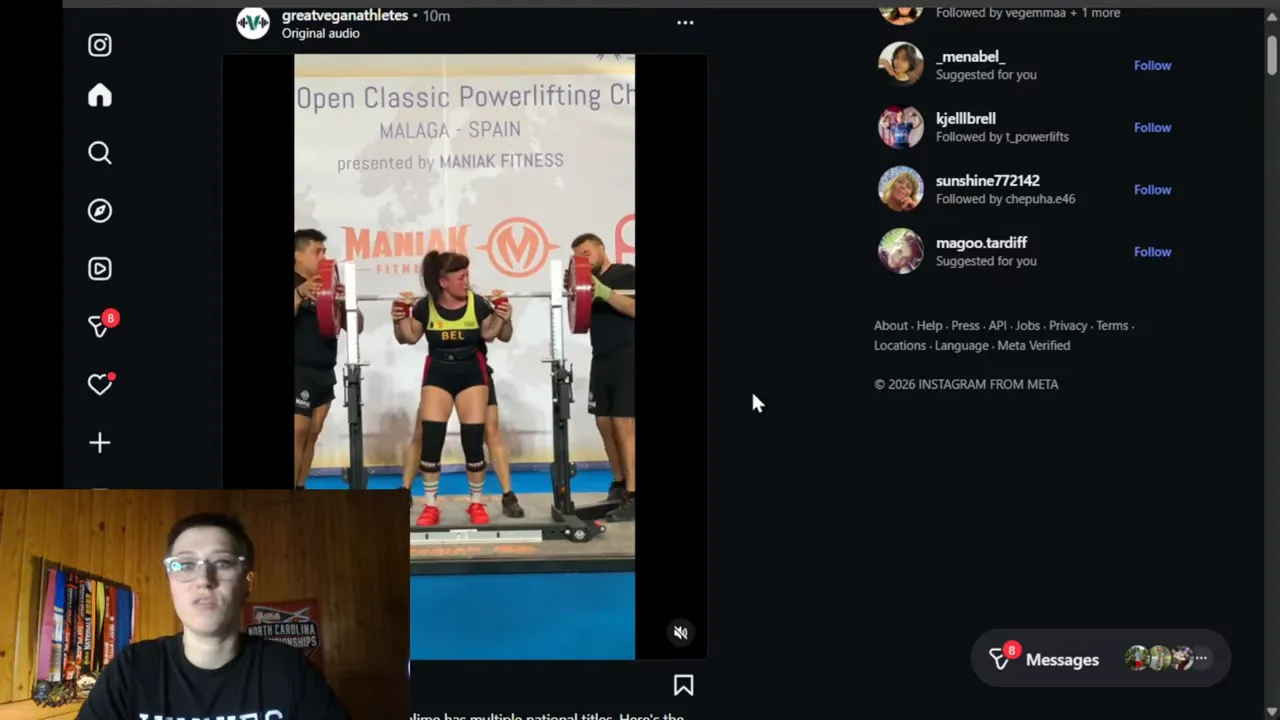
- Hands and thumbs must stay in full contact with the bar; thumbs do not have to wrap but must stay in contact. I think this is a good safety rule. They didn't enforce thumbs around the bar though.
- Deadlift lockout clarified with shoulder-deltoid projection rules and mandatory knee lockout. Oof. watch the video to see my opinion of that - otherwise this article will be a book.
- Personal equipment: full-body singlets allowed; sleeved singlets must have the sleeves worn over the singlet and deadlift socks optional. Not something most lifters encounter but cool.
- Knee sleeve assistance permitted. Wow we can all get XXXS sleeves and get 10 people to help put them on without hiding in the corner! Super cool!
- No walkouts, no stepping forward over the bar, and restrictions on celebratory actions (belt tossing, backflips). Not fun for the sport getting more popular. Interesting they're enforcing this AFTER Sheffield.
- Weigh-in options clarified: underwear, nude, or lifting gear permitted; same-sex officials must perform the weigh-in. Could be useful for those for whom 100g of a t-shirt could make a weight difference.
- Hair must not obscure judges’ view; long hair must be tied and braided where necessary. This includes delts for squat and deadlift unlike before.
- Instant replay is allowed for jury review and the jury decision is final. This was used before, but now the language is more clear.
- No alcohol in the warm-up area; head coaches are responsible. Funny rule. Not that alcohol benefits in any way, but I guess this means no yolo shots before the last deadlift and no celebration after when packing up.
Bench press: chest thrust removal
Two bench items are likely to cause the most impact on lifters: full elbow lock before the start command and the ban on using an upper-body thrust to initiate the bar from the chest.
- Eliminate the thrust: emphasize smooth leg drive that helps hip and torso stability without lifting the chest with the upper body. Slow tempo touch-and-press sets will help ingrain pressing without an upward thrust from legs that could move the torso and disqualify an otherwise good lift.
- Monitor arching: the IPF is restricting extreme arch that shortens the range of motion based on the previous rule revision. If your solution to circumvent this rule was to incorporate the thrust - this won't work anymore. Shift to a more moderate arch if you currently rely on a very large arch to minimize ROM.
Practicing pause presses, larsen presses and controlled eccentric work will help you adapt while keeping strength gains.
My arms are short. How will the bench rule affect me?
Short arms and a large arch make staying within the new range of motion challenging. Focus on technique-based strength: paused bench, heavier close-arc work, and mobility that allows a legal touch without sinking the bar.
If anatomy makes compliance extremely difficult send me your bench press oin social media and I'll be happy to brainstorm potential solutions to keep kilos on the bar and get the white light angles for you.
Squat: bar placement and hands on the bar
The bar must sit no lower than the posterior deltoid level. Low-bar and "French squat" placements that rest the bar on the triceps may now be a cause for red lights. I find your arm pit a good clear visual of whether the bar sits low or high, and so may the judges.
- Train high bar squats to get your abs and the rest of the anterior chain carry more load during the squat.
- Adjust low bar placement in training: better safe than sorry. Move the bar slightly higher and retrain the groove - start lighter and reinforce depth and core bracing with the new bar height. Allow a few training blocks to truly relearn!
- Grip contact: hands, thumbs, and fingers must remain in complete contact with the bar during the lift. Thumbs do not have to wrap the bar but must touch it, so work on a secure grip, even in warm-ups. Especially in warm-ups.
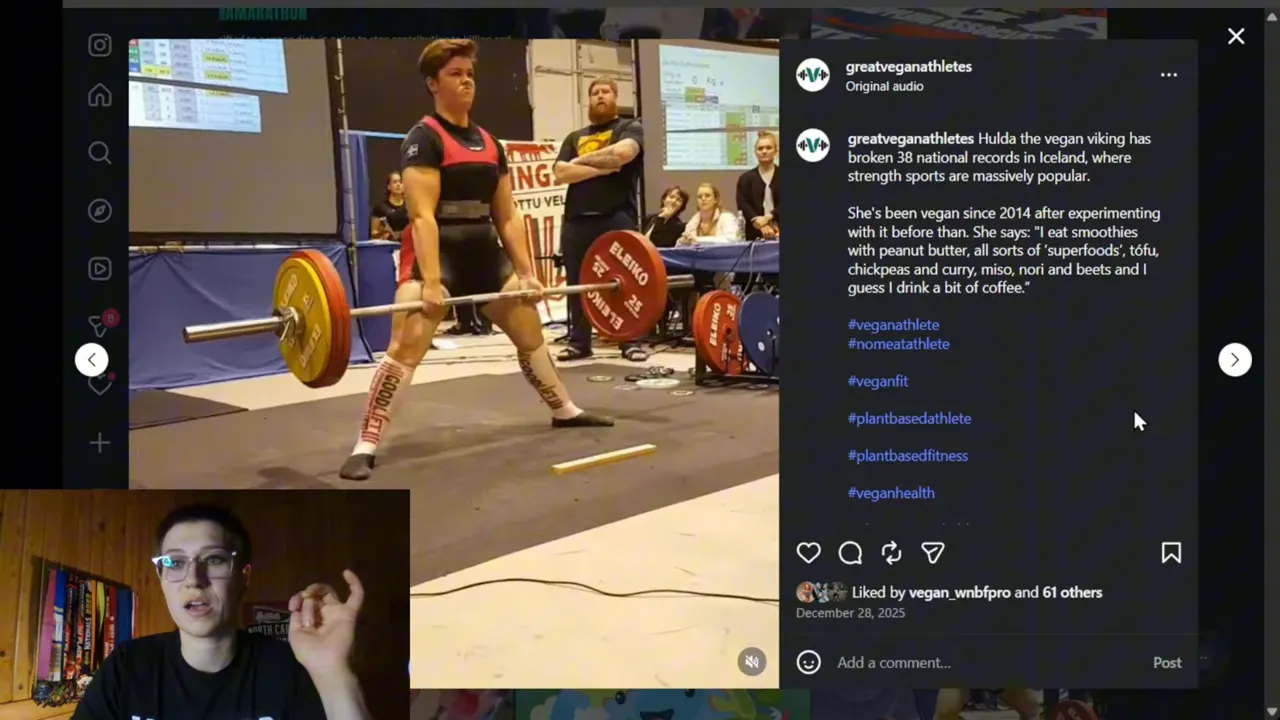
Deadlift: attempts to define lockout clarity
The deadlift lockout wording focuses on the position of the deltoid relative to the bar's projection. Practically, judges want to ensure the lifter is locked out not only in the lower back, but also in the upper back. Making sure no one finishing with hunched shoulders in front of the bar even if the lower back seems locked out.
- Speed deadlifts with 30 sec rest intervals I like these weird drills that load the CNS with light ish load to keep focus top of mind when mistakes tend to cripple in the more tired you get.
- Stretch lats and upper back - thoracic spine tends to be WAY TIGHTER than lower back, so massaging and stretching pecs and front delts as well as gaining strength in the rhomboid seems like a no-brainer. Even more so now. If you like torture: back extensions with the bar on the back and cambered bar good mornings are great too for mid- and upper back strengthening.
- Check lockout from all angles: Film your max attempts from three angles where the judges sit during training. Flawless in the gym = flawless on the platform.
- LOSE THE OLD HABITS of stepping over the bar - in Russia we say: "the bar is like your woman (or man - idk who you're into). Respect it, do not step over, or it will stick to the floor."
Equipment and personal items
The IPF clarified several equipment rules that affect religious clothing, shoes, sleeves, and personal items.
- Full-body singlets for religious reasons are permitted, but knee sleeves must be worn over the singlet. Deadlift socks are now optional if the singlet has legs.
- Knee sleeve assistance is allowed. If you struggle to put sleeves on, you can now ask for help. This is a welcome change for many athletes who want to save energy for the squat, not fighting the knee sleeves up or down.
- Shoes must be fastened on the platform. Makes sense safety wise. Practice with your shoes tied so this is not an issue on meet day. Doesn't sound like a big deal, however I squat and bench with thumb loops ON purely out of laziness to take them off. It doesn't bring any advantage, but believe it or not - I've forgotten to take them off multiple times during meets and blew my opener with this idiotic habit! So, practice the way you will lift on the platform.
- Necklaces must be secured underneath the t-shirt and should not be placed in the mouth while approaching or on the platform. If you have ritual items, plan how to secure them before stepping up.
Presentation and platform behavior
Expect a more controlled platform environment. Walkouts to the front of the platform, crossing over the bar after a deadlift, belt tossing, and showy movements can get you in trouble. Unclear what kind of trouble exactly, so if you break this rule and find out - let me know what the punishment was in the comments. Hair must be tied so referees can judge bar positioning during the squat and lockout in deadlift.
The implications are simple: rehearse clean entrances and exits, rehearse quick belt unlocks rather than dramatic removals, and keep celebrations brief and off the platform.
Weigh-in, officials, and fairness concerns
Athletes may weigh in nude, in underwear, or wearing lifting gear. now. Not going to help much but if you're under or over 100g this could be a saving grace. Weigh-ins must be performed by an official of the same sex. Sounds like this clarification reinforces the federation's stance on categories based on biological sex, not gender.
Double-check the meet’s weigh-in procedures well in advance so you know what to expect and pacl. If this is your frst meet - I've already made a cheat sheet of items to bring for you.
Download the 7-page infogrpahic below:

Judging tools and conduct: instant replay, referees, and alcohol
Instant replay is an official tool for the jury, and jury decisions after replay are final. Countries are also allowed more referees at world-level events and stricter qualification requirements for top-category referees.
No partying in warm-up area anymore or yolo shots pre last deadlift attempts. No alcohol is permitted, and head coaches are responsible for ensuring compliance.
Final thoughts
The best approach is proactive: adapt technique in training, test equipment under meet conditions, and streamline platform behavior. Change can be frustrating, but there's no point freaking out about it if you can't affect it.
Being methodical will give you confidence. Small consistent steps beat last-minute panic.
Rules change, but the core of lifting remains: consistent practice, smart coaching, and respect for the platform. Use these updates as an opportunity to refine technique and to show up prepared.
If you want help translating these rule changes into training sessions or meet-day plans - I'm happy to help you program for the upcoming meet.
Ready to take your training to the next level, get stronger, improve your diet? |
|
Our team is here to help! |
| Apply for 1:1 Coaching |