
Deep Squat Stretch: Supported, Bodyweight, and Weighted Techniques
One of the most valuable mobility exercises you can incorporate into your routine is the deep squat stretch. This stretch not only improves hip and ankle flexibility but also enhances your overall squat mechanics, which is essential for building strength safely and effectively. I want to share with you a comprehensive guide to the deep squat stretch, covering supported, bodyweight, and weighted variations that will help you progress at your own pace. Whether you’re working out at home or in the gym, pregnant or not, this stretch can be adapted to fit your unique needs.
Let’s dive into how to perform this stretch correctly, common pitfalls to avoid, and progression tips that can make your squat deeper, more comfortable, and more powerful.
Why the Deep Squat Stretch is Essential
For those of us embarking on strength training journeys mobility work often gets overlooked. However, mobility is the foundation that allows safe and effective strength gains. The deep squat stretch targets crucial areas like the hips and ankles, which are vital for proper squat form and injury prevention.
Maintaining heels on the floor and keeping a neutral spine during the squat are essential for powerlifters to maximize force transfer and avoid undue strain on the lower back and knees. This stretch trains your body to hold that position comfortably, improving your squat depth and overall movement quality.
Whether you’re just starting out or looking to deepen your stretch, this guide will walk you through each stage.
Supported Deep Squat Stretch: Getting Started with Band Assistance
When you’re new to deep squats or find it challenging to keep your heels down and back straight, using support can make all the difference. One of the best tools for this is a resistance band anchored to a stable point, like a door frame or gym equipment.
Imagine placing a band above a door and holding onto it as you lower yourself into a deep squat. The band acts as a support system that helps you balance and maintain proper form, especially as you work on ankle and hip mobility.
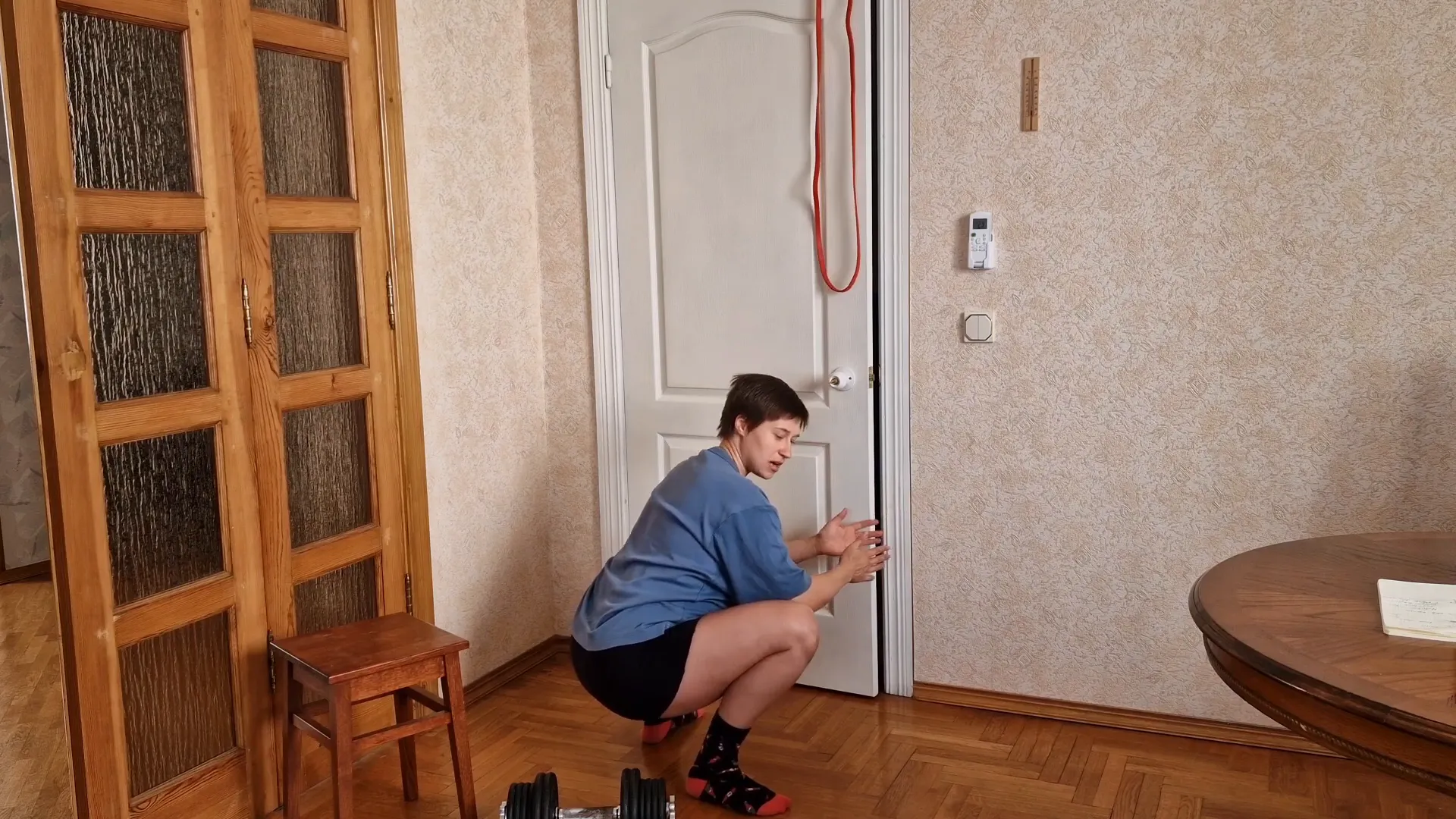
Start by lowering yourself slowly into the squat while holding the band. Stay in the stretch for about thirty seconds. If you feel comfortable, increase the duration to sixty seconds and incorporate gentle rotations to each side while maintaining the hold. These rotations help mobilize the hips further and add variety to the stretch.
This assisted version is particularly helpful if you struggle to keep your heels on the floor or find it difficult to rise from the deep squat position without losing balance.
Remember, keeping your heels on the floor at all times is a non-negotiable part of this stretch. This positioning ensures proper ankle dorsiflexion and stability, which are key for effective squatting.
Tips for Supported Deep Squat Stretch
- Find a sturdy anchor point for your band—door frames, poles, or gym racks work well.
- Hold the band firmly but don’t rely on it entirely; use it as a guide and balance aid.
- Keep your knees tracking outward, and avoid letting your pelvis curl under.
- Use this as a stepping stone before progressing to bodyweight squats.
Bodyweight Deep Squat Stretch: Building Strength and Mobility
Once you’re comfortable with the supported version, the next step is to try the deep squat stretch using just your body weight. This variation challenges your balance and flexibility more but is crucial for developing the strength needed for heavy lifts.

Start by lowering into a deep squat, keeping your heels flat on the floor. Use your elbows to gently push your knees outward, which helps open up the hips and activate the surrounding muscles. This action increases the stretch in your hips and ankles, making it more effective.
One of the beauties of this stretch is its adaptability. You can adjust your foot positioning to target different areas:
- Feet closer together for a more focused hip stretch.
- Feet wider apart to open the groin and inner thigh muscles more deeply.
- Toes pointed slightly outward or forward depending on your comfort and anatomical structure.
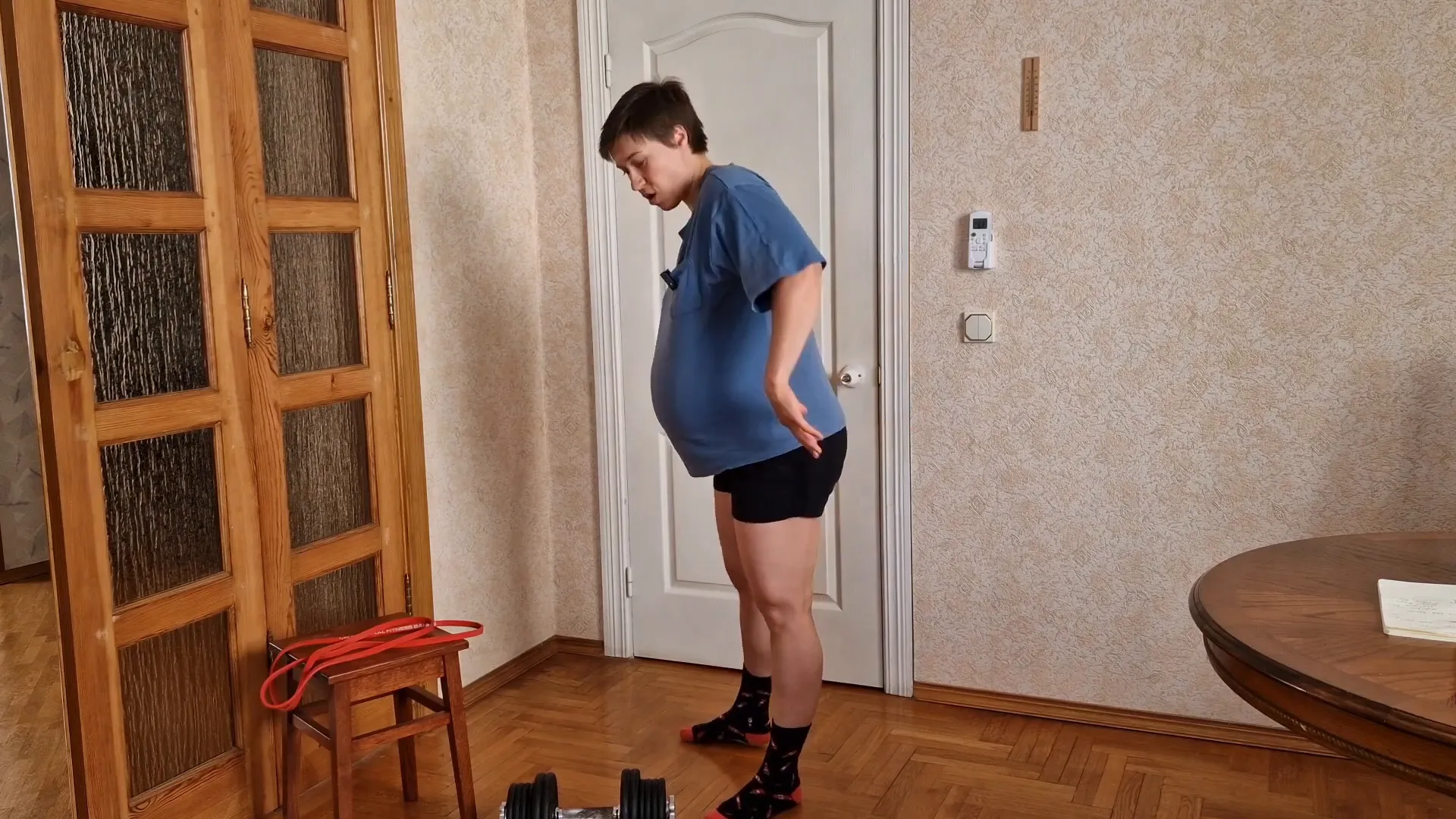
As someone who is currently pregnant, I find a wider stance more comfortable because it accommodates my belly and allows me to maintain balance without strain. However, you should find the foot position that feels best for you.
During the stretch, you can also roll slightly from your toes to your heels to engage different parts of your feet and ankles. Another great addition is to grab your feet and look upward while raising one arm for a gentle upper body stretch. Normally, I like to do a couple of gentle torso twists in this position to increase spinal mobility, but pregnancy limits how much I can twist safely.
Maintaining Proper Form
One common mistake during deep squats is allowing the pelvis to curl under, which compromises your lower back position and reduces the effectiveness of the stretch. To avoid this, focus on keeping your back straight, butt pushed back, and knees tracking outward throughout the stretch.
When you notice your pelvis beginning to round or curl, it’s a sign to rest or come out of the stretch. Maintaining a neutral pelvis protects your lumbar spine and ensures you’re targeting the right muscles.
Weighted Deep Squat Stretch: Taking Your Mobility to the Next Level
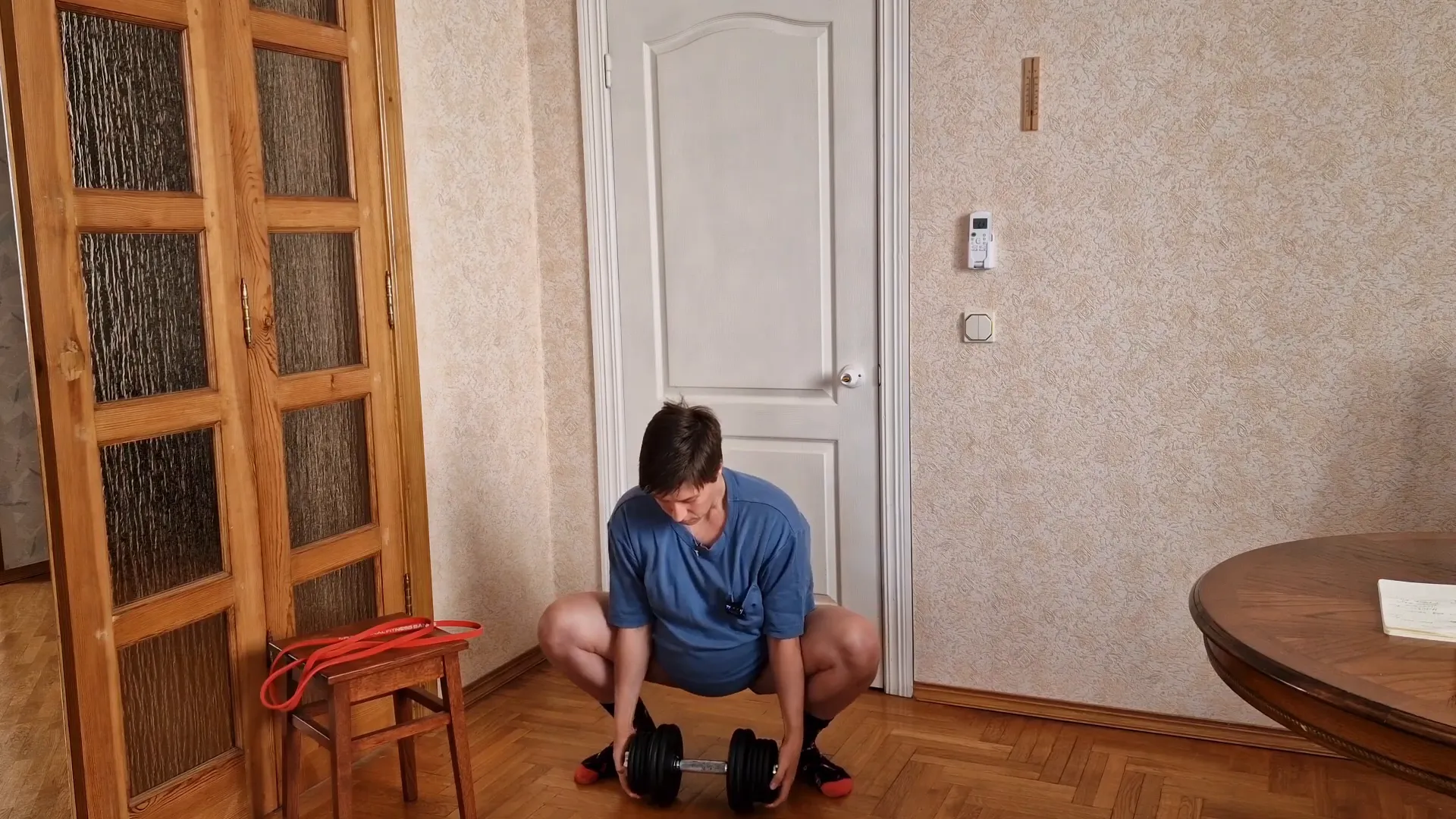
For those who have mastered the bodyweight deep squat stretch and want to deepen their hip and ankle mobility further, adding weight can be incredibly beneficial. At the gym, you’ll often find large, round plates available in various weights—bumper plates, steel plates, or iron plates. These plates are perfect for adding resistance to your stretch.
Pick a plate that feels comfortable for you—this could be anywhere from 5 kg to 20 kg depending on your strength and experience. Hold the plate in front of you as you sink deep into the squat. The weight of the plate helps push your elbows into your knees, which in turn forces the knees outward and encourages the hips to open up more fully.
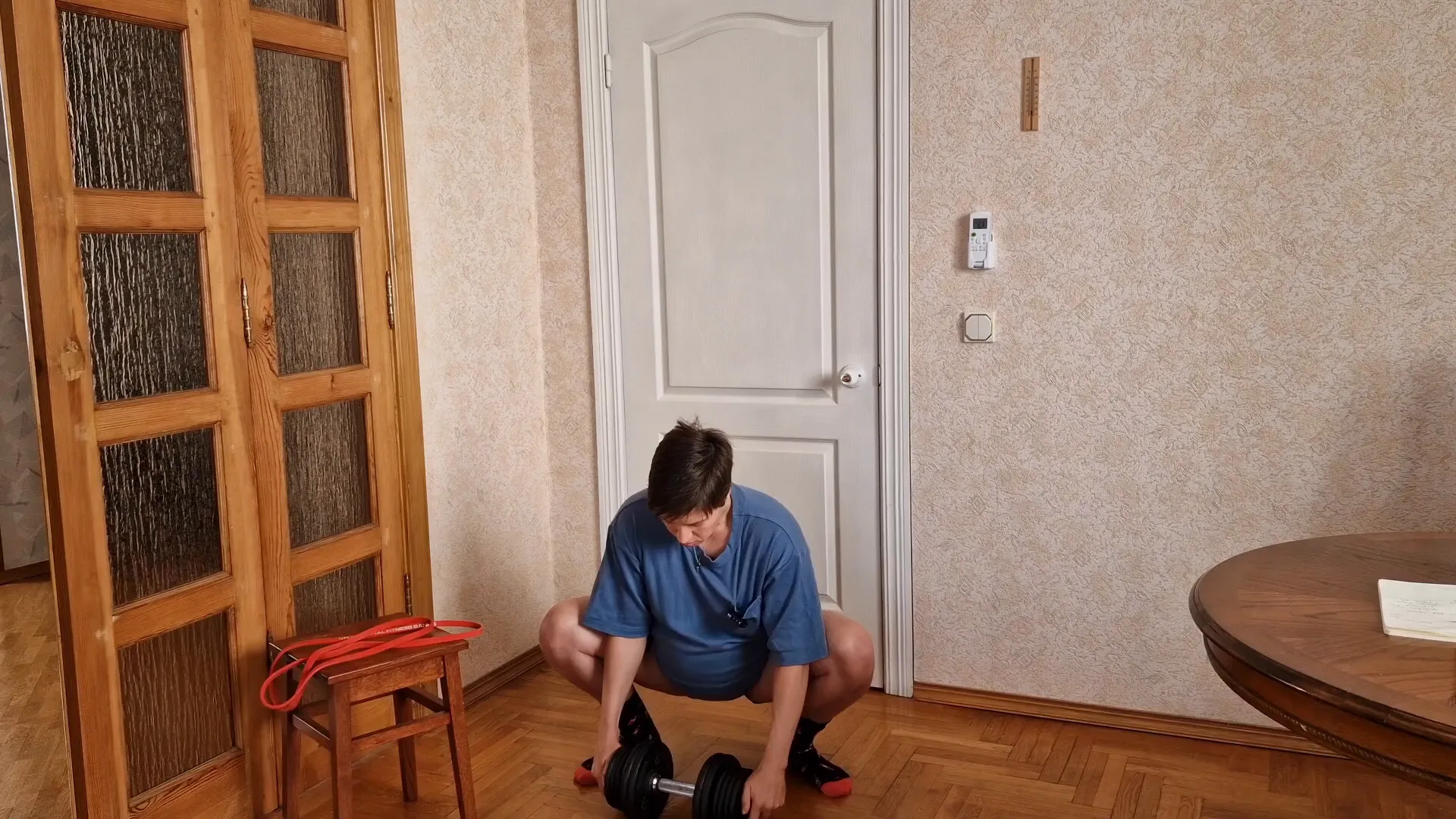
If you don’t have access to plates, dumbbells or kettlebells can also work. Hold the dumbbell close to your chest and use it as a lever to press your elbows against your knees. This creates the same effect of pushing the knees outward and opening the hips.
Personally, I prefer using a round plate because its shape and weight distribution make it easier to hold steadily while focusing on the stretch.
Benefits of Weighted Deep Squat Stretch
- Enhances hip joint mobility and flexibility.
- Improves ankle dorsiflexion and stability.
- Builds strength in the muscles around the hips and knees.
- Prepares your body for heavier squats and lifts.
Weighted stretches should always be done mindfully and progressively to avoid injury. If you find it hard to maintain a straight back or keep your heels down with the added weight, return to the supported or bodyweight versions until you build adequate mobility and strength.
Progression Plan: From Supported to Weighted Deep Squat Stretch
It’s essential to approach mobility work with patience and a clear progression plan. Here’s a simple roadmap to follow:
- Supported Stretch: Use a resistance band or a sturdy support to help you balance and sink into the squat with heels on the floor.
- Bodyweight Stretch: Once comfortable, practice the deep squat without support, pushing your elbows against your knees to open the hips.
- Weighted Stretch: When your form is solid and your mobility improved, add weight using plates, dumbbells, or kettlebells to deepen the stretch.
Throughout all stages, focus on maintaining a straight back, neutral pelvis, and heels firmly planted on the floor. These key points will help you get the most out of the stretch and prepare your body for effective strength training.
Additional Tips for Deep Squat Stretch Success
- Consistency is key: Incorporate this stretch into your warm-up or recovery routine several times a week for best results.
- Listen to your body: Avoid pushing into pain or discomfort. Mobility work should challenge you but not cause injury.
- Use proper footwear: Flat, stable shoes or barefoot can help you maintain proper alignment during the squat.
- Combine with other mobility exercises: Ankle circles, hip openers, and foam rolling can complement your deep squat stretch routine.
I understand the importance of efficient, targeted mobility exercises that fit into a busy lifestyle and support strength gains. The deep squat stretch is a versatile tool that addresses multiple joints and muscle groups simultaneously, making it a time-efficient way to improve your lifting mechanics and reduce injury risk.
Moreover, the progression from supported to weighted versions allows you to customize the stretch according to your current ability and goals. This adaptability is especially important for athletes who struggle with flexibility or balance initially.
Incorporating this stretch into your routine can lead to better squat depth, improved ankle and hip mobility, and a stronger foundation for all your lifts—whether it’s squats, deadlifts, or Olympic lifts.
Final Thoughts
The deep squat stretch is more than just a flexibility exercise—it’s a foundational movement that can transform your strength training journey. By progressing thoughtfully from supported to bodyweight to weighted versions, you’ll build the mobility and strength necessary to perform deep squats with confidence and control.
Remember to keep your heels on the floor, maintain a straight back, and avoid pelvis curling to maximize the benefits of this stretch. And don’t be afraid to experiment with foot positioning and gentle rotations to find what works best for your body.
If you’re ready to improve your squat mechanics and unlock greater strength potential - start incorporating the deep squat stretch into your routine today. Your hips, ankles, and knees will thank you!
For more recovery, warm-up, and strength training exercises tailored to your needs, be sure to explore additional resources and playlists available online. Consistent mobility work paired with focused strength training is the key to long-term progress and injury prevention.
Ready to take your training to the next level, get stronger, improve your diet? |
|
Our team is here to help! Select from a list of our signature 1:1 custom programs or self-guided courses |
| See Programs |